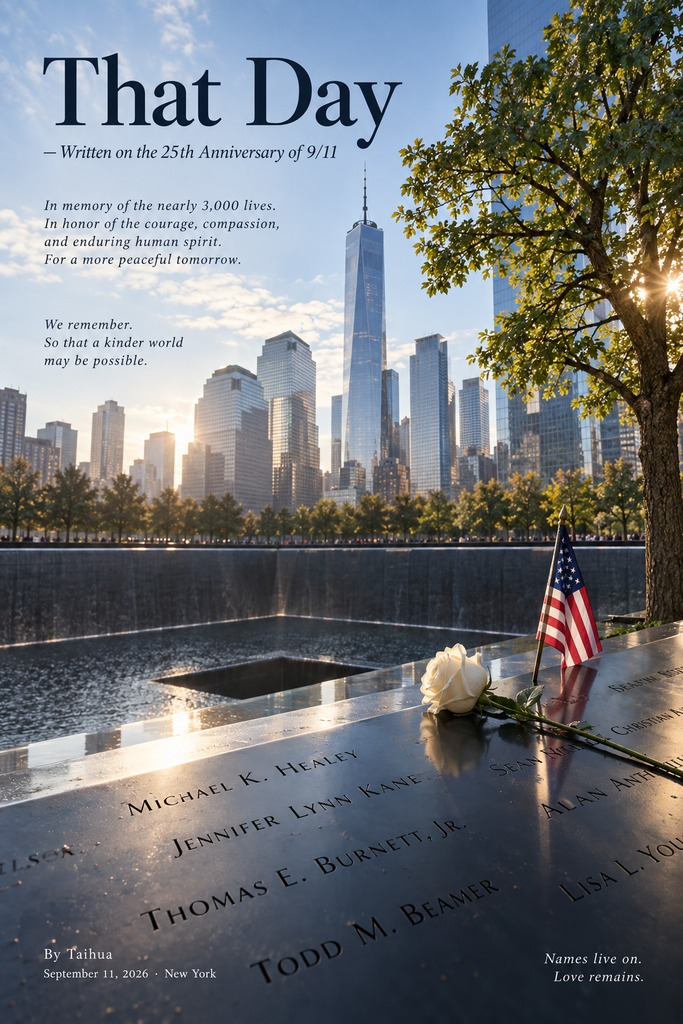
《那一天》 寫在九一一廿五週年(中文)
文/泰華
2026年9月11日,寫於紐約
第一章 和平
那是一個和平的早晨
沒有前線
沒有炮火
沒有防空警報
飛機照常起飛
載著出差的人
旅行的人
和準備回家的人
高樓裡
咖啡還冒著熱氣
電話那頭有人說
晚上見
沒有人知道
這句平常的告別
竟是一生
沒有等到的約定
第二章 突襲
有人把仇恨帶進客艙
把殺機藏進平民的衣裳
像古老的白衣渡江
只是這一次
渡過的不是一條江
而是人與人之間的信任
載人遠行的翅膀
突然成為武器
沒有參戰的城市
突然成為戰場
四架民航客機
劃破和平的天空
這不是偶然的瘋狂
而是精心計算的恐怖
本·拉登躲在遠方
近三千個生命
替他的仇恨
付出了代價
第三章 誰的正義
我們來自一個
飽受侵略的民族
祖輩留下的傷口
教會我們同情弱者
警惕強者
這沒有錯
可是我們是否也曾
不知不覺地相信——
弱者就是正義
強者便有了罪
於是有人說
美國是霸權
九一一不過是弱者
無奈的反抗
甚至也是一種正義
可是
平民有原罪嗎
一個人僅僅因為
出生在強大的國家
便應該承擔
這個國家所有的罪嗎
力量本身
什麼時候成為了罪
歷史從來沒有
那麼簡單
今天被稱為強者的美國
也曾與盟國一起
走進世界大戰的硝煙
有人倒在諾曼底
有人跨過太平洋的炮火
歷史不能成為
任何人的永久勳章
也不能成為
另一些人的世襲罪名
你可以反對霸權
控訴戰爭
質問強權
卻不能把
清晨上班的人
登上飛機的人
等待孩子回家的父母
一起判了罪
強者的暴力
不會因為強大
就成為正義
弱者的暴力
也不會因為弱小
就天然高尚
正義若還有意義
就應該問——
誰拿起了武器
誰作出了選擇
誰傷害了無辜
第四章 歡呼
當高樓倒下
竟有人歡呼
當陌生人的生命墜落
竟有人把死亡
當作勝利
二十五年後回望
我們也應該問自己
那些被反覆講述的敵我
那些不知不覺接受的灌輸
是否曾讓我們
只看見一個國家
一個陣營
一個符號
卻沒有看見
符號後面的人
我們也曾無意識地
成為仇恨的旁觀者
沒有舉起刀
沒有扣動扳機
卻曾對別人的傷痛
失去感覺
直到耶穌的愛
重新照進我們的心
祂讓我們看見
所謂敵人
也有一張人的臉
也有父母妻兒
也有人等待他回家
倒下的不是一個國家
而是辦公室裡的職員
趕路的旅客
衝進濃煙的消防員
他們只是人
立場可以不同
信仰可以不同
歷史可以爭論
但總該有一條底線——
不能因為仇恨一個國家
便為它的平民死亡歡呼
更不能把一個孩子的鮮血
解釋成
另一種正義
因為當我們開始
對無辜者的死亡無動於衷
首先倒下的
也許不是遠方的高樓
而是我們心裡
最後那一道
不該倒下的牆
第五章 戰爭
廢墟還在冒煙
世界已經開始
呼喊正義
戰機飛向阿富汗
戰爭後來又越過
伊拉克的天空
本·拉登
有本·拉登的罪
薩達姆
有薩達姆的罪
可是一個人的罪
該由多少陌生人償還
當戰火蔓延
當另一個母親
從廢墟中抱起孩子
我們仍然需要追問——
正義的邊界
究竟在哪裡
紐約辦公室裡的職員
喀布爾街頭的孩子
巴格達窗前的母親
說著不同的語言
生活在不同的土地
卻有一個共同的名字——
平民
他們沒有選擇戰爭
戰爭卻選擇了他們
第六章 神的名字
有人喊著「聖戰」
把殺戮
寫在神的名下
有人說起「十字軍」
古老的詞
從歷史深處醒來
人總是容易
把自己的憤怒
說成神的憤怒
把自己的敵人
說成神的敵人
可是
無論是誰
都不能借神的名字
發動仇恨
殺害無辜
不能一面高喊神聖
一面讓平民的鮮血
流在腳下
神不需要人的刀劍
證明祂的偉大
更不需要無辜者的生命
證明誰的信仰正確
當有人再次宣稱
神站在自己這一邊
我們更應該問——
這是神的旨意
還是人的目的
借用了神的名字
第七章 代價
二十五年過去
那四架飛機
早已消失在
歷史的濃煙裡
可是從那一天起
每一個登機的人
都要證明
自己不是敵人
打開行李
走過一道道安檢門
我們為一張機票付錢
也為失去的信任付錢
恐怖分子
只用了一個早晨
世界卻用了二十五年
仍在支付代價
從前
一架飛機只是飛機
一個旅客只是旅客
後來我們才知道
信任一旦被炸毀
重建它
比重建一座高樓
更難
第八章 名字
二十五年後的今天
我在紐約
從電視裡望著那裡
鐘聲敲響
人群靜默
一個名字
又一個名字
被緩緩念出
螢幕上
頭像、名字、生年
一一出現
不同的膚色
不同的族裔
不同的故鄉
每一個聲音
喚回一張面容
妻子呼喚丈夫
父親呼喚兒子
兒子呼喚母親
孩子呼喚父親
還有一個孩子
輕輕嘆息
呼喚從未見過的叔叔
一個個名字
原來都是
一個家庭裡
留下的空位
還有一個
沒有名字的生命
尚在母腹
沒有來得及出生
卻沒有被遺忘
有人說
如果弟弟還在
不會選擇仇恨
只會擁抱家人
有人說
爸爸希望人們記住的
不是他如何死去
而是
他如何活著
這一句話
讓我久久不能平靜
九一一
是他們生命的最後一天
卻不是
他們生命的全部
靜默中
馬友友的大提琴響起
低沉的琴聲
流過一張張面容
也流過二十五年的歲月
《Go Rest High on That Mountain》
歌聲隨後響起
我聽見最後留下的
是愛
那棵從廢墟裡
活下來的樹
依然長著新葉
名字繼續念下去
從 A 到 Z
四個小時
一次次聽見親人說——
我們每天都在想你
長長的名單
長長的思念
長長的愛
名單終於念完
可是思念沒有
愛也沒有
第九章 歸回
二十五年後的今天
我們紀念九一一
不是為了
重新打開仇恨的傷口
而是為了
不讓悲劇重演
用更大的仇恨
能夠消滅仇恨嗎
用更多的鮮血
能夠洗去鮮血嗎
二十五年過去
廢墟已經回答——
不能
正義不是沉默
面對暴行
必須制止
面對罪惡
必須追究
讓兇手承擔自己的罪
而不是讓無辜者
替他償還
可是正義之後
還需要愛
有人衝進燃燒的大樓
沒有先問裡面的人
來自哪個國家
有人跪在廢墟上救人
沒有先問傷者
相信哪一位神
有人伸出雙手
背起一個陌生的生命
那一刻
只有一個生命
在挽救另一個生命
正義
制止罪惡
良知
守住底線
愛
救死扶傷
饒恕
截斷仇恨
而真正能夠進入人心
拔掉仇恨根鬚的
不是另一把刀
是基督的愛
那愛使麻木的心
重新疼痛
使我們在所謂敵人的臉上
重新看見
一個人
因為人
都是按神的形象所造
沒有一個民族
生來應該被仇恨
沒有一個孩子
應該繼承父輩的戰爭
沒有一個平民
應該成為
任何主義的祭品
神的救贖
是把我們
從自己心裡的仇恨中
拯救出來
讓我們重新相信——
一架客機只是客機
一個旅客只是旅客
一個清晨出門的人
晚上應該
平安回家
九一一之後
我們建起一道道安檢門
可是人類真正需要重建的
還有人與人之間的信任
高樓倒了
可以重新建起
而人的心
如果被仇恨佔領
需要更深的重建——
回歸良知
回歸信任
回歸友愛
回歸和平
二十五年後的今天
願那兩座
沒有重新建起的塔
留下的兩個空缺
不只讓我們記住
曾經失去什麼
也讓我們記住
應該找回什麼——
那一個
神創造人時
放在我們裡面的
人的模樣
That Day — Written on the 25th Anniversary of 9/11
By Taihua
September 11, 2026 · New York
I. Peace
It was a peaceful morning.
No front lines.
No artillery.
No air-raid sirens.
Planes took off as usual,
carrying business travelers,
vacationers,
people on their way home.
Coffee was still steaming
in offices high above the city.
Someone on the phone said,
See you tonight.
No one knew
that such an ordinary goodbye
would become a promise
a lifetime could not keep.
II. The Attack
Someone carried hatred
into the cabin
and hid the intent to kill
behind the face of an ordinary traveler.
Like an ancient army
crossing a river in disguise—
only this time
the river was trust itself.
Wings made to carry people
became weapons.
A city that was not at war
became a battlefield.
Four passenger planes
tore through a peaceful sky.
This was no sudden madness.
It was terror, calculated in advance.
Bin Laden hid far away.
Nearly three thousand lives
paid the price
for his hatred.
III. Whose Justice?
We come from a people
who know what invasion means.
The wounds our ancestors carried
taught us to stand with the weak
and distrust the strong.
There is nothing wrong with that.
But somewhere along the way,
did we begin to believe
that weakness itself meant justice,
and strength itself meant guilt?
Some called America
a hegemon.
Some called 9/11
the desperate resistance
of the weak.
Some even called it
a kind of justice.
But do civilians
inherit guilt?
Should someone born
in a powerful country
be made to answer
for everything that country has done?
When did strength itself
become a crime?
History has never been
that simple.
The America called powerful today
once went to war beside its allies.
Some fell on the beaches of Normandy.
Some crossed the Pacific under fire.
History cannot be
any nation’s permanent medal,
nor another people’s
inherited sentence.
You may oppose domination,
condemn war,
challenge power.
But you cannot condemn with it
the person arriving at work,
the passenger boarding a plane,
the parents waiting
for their child to come home.
Violence does not become just
because the powerful commit it.
Nor does it become noble
because it comes from the weak.
If justice still means anything,
the question is not
who was strong
and who was weak.
The question is:
Who chose the weapon?
Who chose the act?
Who harmed the innocent?
IV. The Cheers
When the towers fell,
some people cheered.
When strangers fell from the sky,
some called their deaths
a victory.
Twenty-five years later,
we should also question ourselves.
All those stories
of us and them,
all those divisions
we absorbed without noticing—
did they teach us
to see only a country,
a camp,
a symbol,
and not the human being
behind it?
We too may once have stood
among the silent spectators of hatred.
We raised no knife.
We pulled no trigger.
Yet another person’s suffering
could leave us untouched.
Until the love of Christ
shone into our hearts again.
It taught us to see
that even the person
we call an enemy
has a human face,
has parents,
has children,
has someone waiting
for them to come home.
What fell that morning
was not a country.
It was office workers,
travelers,
firefighters running into smoke.
They were human beings.
We may disagree about nations.
We may disagree about faith.
We may argue over history.
But there must be a line
we refuse to cross:
Hatred of a country
cannot make the death
of its civilians worth celebrating.
No child’s blood
can be explained away
as another form of justice.
For when the death
of an innocent stranger
no longer moves us,
perhaps the first thing to fall
is not a distant tower,
but the last wall within us
that should never fall.
V. War
The ruins were still smoking
when the world began
to call for justice.
Warplanes flew toward Afghanistan.
Later, war crossed
the skies of Iraq.
Bin Laden had his crimes.
Saddam had his.
But how many strangers
should pay
for another man’s crimes?
When war spreads,
when another mother
lifts her child from rubble,
we still have to ask:
Where does justice end?
An office worker in New York.
A child on a street in Kabul.
A mother at a window in Baghdad.
Different languages.
Different countries.
One name:
civilian.
They did not choose war.
War chose them.
VI. In God’s Name
Some cried “holy war”
and wrote killing
under the name of God.
Others spoke of a “crusade,”
an ancient word
stirring again from history.
How easily we turn
our anger
into God’s anger,
our enemies
into God’s enemies.
But no one
has the right to borrow God’s name
to spread hatred
or kill the innocent.
No one can cry “holy”
while civilian blood
runs at their feet.
God does not need our swords
to prove His greatness.
Nor does He need innocent lives
to prove whose faith is right.
Whenever someone declares
that God is on their side,
we should ask:
Is this truly the will of God,
or has a human purpose
simply borrowed His name?
VII. The Price
Twenty-five years have passed.
Those four planes
have long since vanished
into the smoke of history.
But from that morning on,
every passenger
has had to prove
they are not an enemy.
Open the bag.
Pass through another checkpoint.
We pay for the ticket.
We also pay
for the trust we lost.
The terrorists needed
only one morning.
Twenty-five years later,
the world is still
paying the price.
Once,
a plane was simply a plane.
A passenger
was simply a passenger.
Then we learned:
once trust is destroyed,
it can be harder to rebuild
than a tower.
VIII. The Names
Twenty-five years later,
I am in New York,
watching from a screen.
A bell sounds.
The crowd falls silent.
One name,
then another,
is read aloud.
On the screen:
a face,
a name,
a year of birth.
Different faces.
Different backgrounds.
Different homelands.
Every voice
brings back a face.
A wife calls her husband’s name.
A father calls his son’s.
A son calls his mother’s.
A child calls his father’s.
One child sighs softly
before speaking the name
of an uncle
he never knew.
These are not simply names.
Each one marks
an empty place
in a family.
And there is one life
without a name—
still in the womb,
never given the chance
to be born,
yet not forgotten.
Someone says
his brother, had he lived,
would not have chosen hatred.
He would have opened his arms
and embraced his family.
Someone else says
his father would want us
to remember
not how he died,
but how he lived.
I cannot shake those words.
September 11
was the last day of their lives.
It was not
the whole of their lives.
In the silence,
Yo-Yo Ma’s cello begins.
Its low voice moves
across face after face,
across twenty-five years.
Then comes
Go Rest High on That Mountain.
And what remains with me
is love.
Nearby,
the tree that survived the ruins
is still putting out new leaves.
The names continue,
from A to Z.
Four hours.
Again and again,
families say:
We think of you every day.
A long list.
A long remembrance.
A long love.
At last,
the final name is read.
But remembrance is not over.
Neither is love.
IX. Return
Twenty-five years later,
we remember 9/11
not to reopen
the wound of hatred,
but to keep the tragedy
from happening again.
Can greater hatred
put an end to hatred?
Can more blood
wash blood away?
After twenty-five years,
the ruins have answered:
No.
Justice is not silence.
Violence must be stopped.
Crime must be answered.
The guilty must bear
the weight of their own deeds,
not hand that burden
to the innocent.
But beyond justice,
there must also be love.
Some ran into burning buildings
without first asking
what country the people inside came from.
Some knelt in the ruins
without asking the wounded
which God they worshiped.
Some reached out
and carried a stranger
to safety.
In that moment,
one human life
was saving another.
Justice
confronts evil.
Conscience
holds the line.
Love
binds the wounded.
Forgiveness
breaks the chain of hatred.
And what can reach
deep enough into the human heart
to tear hatred out by the roots
is not another blade.
It is the love of Christ.
That love makes
a numb heart feel again.
It teaches us to look
into the face of someone
we have called an enemy
and see
a human being.
For every human being
is made in the image of God.
No people are born
to be hated.
No child should inherit
the wars of their parents.
No civilian should become
an offering
on the altar of any ideology.
God’s redemption
rescues us
from the hatred
within ourselves.
It teaches us
to trust again—
that a passenger plane
can simply be a passenger plane,
a traveler
simply a traveler,
and someone who leaves home
in the morning
should come home safely
at night.
After 9/11,
we built checkpoint
after checkpoint.
But what humanity
must also rebuild
is trust in one another.
A fallen tower
can rise again.
A human heart
occupied by hatred
requires a deeper rebuilding:
a return to conscience,
to trust,
to fellowship,
to peace.
Twenty-five years later,
may the two empty footprints
of the towers
that were never rebuilt
remind us not only
of what was lost,
but of what
we must recover:
the human likeness
God placed within us
when He made us.
Terms of Use
You are welcome to share and repost this work, provided that appropriate credit is given to the original creator. Prior written consent from the creator is required for any commercial application.
© 2026 Taihua. All rights reserved. (版权所有,翻版必究)
Instructions on Webpage Language Settings
It is recommended to set your browser’s default webpage language to English. This way, when you visit a Chinese webpage, the page will typically display both the original Chinese text and an English translation derived from the Chinese.
If you need to translate the content further into another language (or convert it into different Chinese characters/fonts), direct translation from Chinese is often inaccurate. In such cases, it is recommended that you refer directly to the English section on the page. Because translation tools generally handle “English-to-other-languages” translation with much higher accuracy, this approach will help ensure better reading comprehension and translation quality.
Choosing this approach to webpage language presentation is a way for our website to go global and provide diverse support. It enables human thought and memory to transcend the barriers of language, space, and time, which is the very purpose of this website.
關於網頁語言設定的說明
建議將瀏覽器的預設網頁語言設定為英文。這樣一來,當您訪問中文網頁時,頁面通常會同時呈現中文原文(簡體/繁體)以及由中文翻譯成的英文版本。
當您需要將網頁內容進一步翻譯成其他語言(或轉換為其他中文簡繁字體)時,由於直接從中文轉譯往往不夠準確,建議您直接參考頁面中的英文部分。因為絕大多數翻譯工具對「英文轉其他語言」的支持更加成熟和準確,這樣能夠有效提升最終的閱讀和理解質量。
選擇這種網頁語言呈現方式,是本網站走向國際、提供多元支持的重要方式。它讓人類的思想與記憶跨越語言、空間乃至時間的障礙,這正是本網站設立的宗旨。
Leave a Reply