
我的故乡(中文原版)
2019-8-27
一直想為故鄉寫點什麼,卻不知從何說起。我十七歲離開故鄉上大學,後來移居海外二十多年,成人後基本上在故鄉逗留的時間不多。雖然近年常常回去,主要是和親人們在一起,每次都來去匆匆,常常感到人是物非。故鄉與祖國其他地方一樣,發生了翻天覆地的變化。因此,對故鄉現在的面貌感到遙遠和陌生,更深刻的印象反而是八十年代以前的樣子。
我的故鄉在東北,黑龍江省五常市,是下轄於哈爾濱市的縣級市,以前稱黑龍江省五常縣,與吉林省的鄰縣接壤。原來在國內默默無聞,現在可以說是名揚海內外,這一切得益於網絡時代和商品經濟的發展,“五常大米”行銷全國,在國內是炙手可熱的美食。在北美的超市裡也有出售,價格不菲。木秀於林,鳥必附之。市場上的好多是冒牌貨。真貨難求。我曾為朋友帶回來一些,朋友很是珍惜,只捨得用它做米粥。
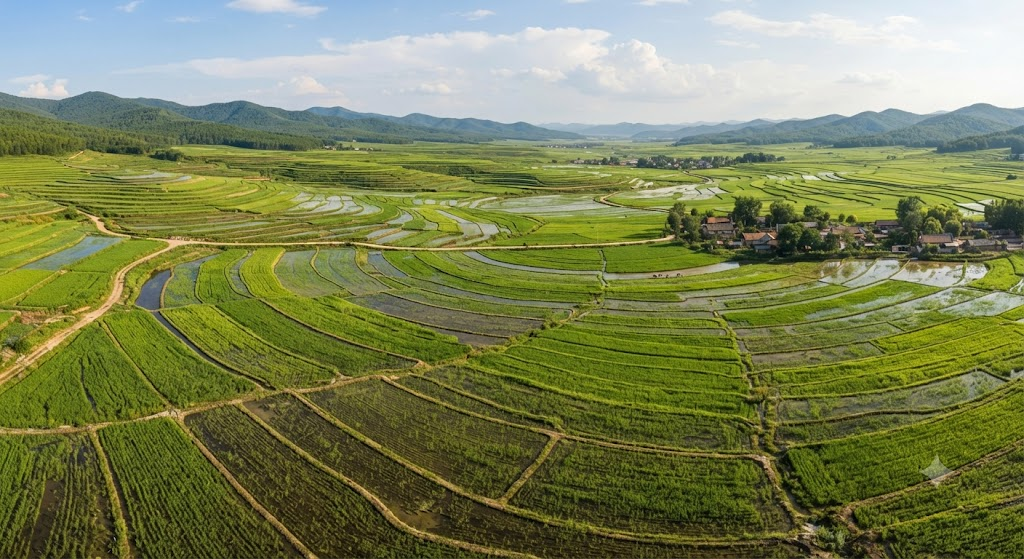
說起五常大米,我是很有發言權的。因為我是吃著五常大米長大的,離開家鄉前也不知道還有別的大米存在。八十年代以前,糧食統購統銷,從糧店買來的大米多是陳米,而且每個人的限量不多,當時能吃上一頓大米,就是改善生活了。特別從特殊渠道買來的新米,更是晶瑩剔透,香味撲鼻,入口甜爽。沒有菜時,大米飯拌點醬油就是不差的一餐了。“五常大米”是由當地的特殊地理氣候環境孕育而生,早在清朝道光年間就是皇家貢米。它歷史悠久,素有“千年水稻,百年貢米”之譽。
五常大米使五常這個地名廣為人知,但很多人可能不知道其得名的由來。它既不是聯合國的五個常任理事國,也不是政治局的五大常委。但我一提“三綱五常”,經過上世紀的批林批孔運動的人,大概都略知一二,它是當時要批倒批臭的孔孟之道的核心內容。最早提出“五常”的是漢代的董仲舒,即“仁義禮智信”,是封建王朝推崇的道德行為規範。清朝咸豐年間,今五常地區放荒供人民開墾,以三綱五常中的“五常”之名陸續建立了“舉仁”、“由義”、“崇禮”、“尚智”與“誠信”這五個甲社,同治年間又設立“五常堡”。據父輩們講,建國前五常城有五個城門,各個城門都用“五常”中的一個字命名。上世紀五十年代,五常縣和拉林縣合併,成為東北少有的大縣,現在人口近百萬。可是在三百多年前,五常的拉林屬清宮電視里常提到的寧古塔,為軍事管轄區,是流放罪臣和犯人的荒蠻苦寒之地。
和東北其他地區一樣,五常人的祖先基本都是外地的移民,以山東河北居多,還有比例很高的滿族和朝鮮族。我家的祖先就是一百年前從河北輾轉來到五常的,長輩們講起那段往事,就和闖關東電視劇里的場景一樣。一家老小步行時挑著擔子,前面筐里是幼兒,後面是行李。那幼年曾被擔在筐里的太爺爺,我童年時還見過他呢,太爺爺當時八十多歲,一頭白髮,雖一輩子務農,但風度儒雅,和藹可親。這些先人們遠離故土,大多是逃荒而來,也抱著對未來的希望來到這片遼闊的荒野。這裡的白山黑水,這裡肥沃的黑土地收留了他們,他們用辛勤的勞動和汗水改變了這裡的模樣,把荒野變成了良田,把北大荒變成了北大倉,把新的家鄉“五常”變成了“魚米之鄉”,富饒的塞外江南。
然而,殘酷的現實很快就打破了他們的田園夢想。二十年代軍閥割據,土匪橫行,社會治安混亂,老百姓生活在恐懼中。我的大舅幼年時就被土匪綁票,外祖父散盡家財,歷盡千辛萬苦才把他贖了回來。三十年代家鄉又遭受日本帝國主義的侵佔,家鄉的人們淪為亡國奴,過著受盡欺壓的生活,長達十四年之久。我的父輩就是在那樣的環境下長大的。但家鄉的人們沒有停止過反抗,五常烈士紀念館裡記載著他們的英雄事跡。最有名的是抗日英雄汪雅臣。汪雅臣幼年舉家從山東逃荒到五常,後被土匪劫持入伙,報號“雙龍”。他帶領八九個青年拉起抗日大旗,發展成上千人的東北抗日聯軍第十軍,他任軍長。為抗日,艱苦卓絕,被俘後,寧死不屈,頭顱被砍下示眾,犧牲時年僅三十歲。建國後他的頭顱被發現,葬在哈爾濱東北烈士陵園。為紀念烈士,五常鎮將最主要的街道命名為“雅臣路”。
九十年代後,家鄉的經濟開始騰飛,GDP以年平均15%的速度增長,其農村人口收入位居全省首位。很多農村人口向城市轉移,在市裡經商和購房屢見不鮮。特別他們中的年輕人,聰明能幹耐吃苦。很多人還通過網絡出售各種土特產,特別是“五常大米”。最近,我幾次晚上乘坐他們的出租車從哈爾濱機場到五常,有機會和他們交談,他們比起我印象中的農民在精神面貌和物質條件上變化很大,已經看不出城鄉差別。更為可貴的是,他們還保持著孝敬老人和尊重師長的傳統美德。我相信,“仁義禮智信”的“五常”品質一定會由他們繼承和發揚下去。從他們身上,我看到了家鄉的美好明天。
My Hometown (English translation by Gemini)
August 27, 2019
I have long wanted to write something about my hometown, yet I never knew where to begin. I left at seventeen to attend university, and since moving abroad over two decades ago, I have rarely spent much time there as an adult. Although I have returned frequently in recent years, those trips have been primarily to visit relatives; they are always hurried, leaving me with a sense that things have changed and people have moved on. Like the rest of China, my hometown has undergone earth-shaking transformations. Consequently, I feel a sense of distance and unfamiliarity with its current face; my most profound impressions remain rooted in the years before the 1980s.
My hometown is in Northeast China—Wuchang, a county-level city under the jurisdiction of Harbin in Heilongjiang Province. Formerly known as Wuchang County, it shares a border with neighboring counties in Jilin Province. Once obscure within China, it is now famous both domestically and internationally, thanks to the internet age and the growth of the commodity economy. “Wuchang Rice” is now a coveted delicacy sold throughout the country. It is even available in supermarkets across North America, albeit at a premium price. But as the saying goes, “a tree that stands above the forest will be destroyed by the wind”—the market is flooded with counterfeits, and the genuine article is hard to find. I once brought some back for friends, and they cherished it so much that they could only bear to use it for making congee.
I am well-qualified to speak on Wuchang rice, as I grew up eating it; before I left home, I didn’t even know other types of rice existed. Before the 1980s, grain was subject to state monopoly, purchase, and distribution. The rice bought from grain shops was usually old, and each person’s ration was limited; being able to have a meal of rice was considered a luxury. The new rice, occasionally obtained through special channels, was crystal clear, fragrant, and sweet to the taste. When there were no side dishes, rice mixed with a little soy sauce was a satisfying meal. Wuchang rice is the product of its unique geographical and climatic environment; it was already a royal tribute rice during the Daoguang reign of the Qing Dynasty. With a long history, it is renowned as “millennial paddy, centennial tribute.”
While Wuchang rice has made the city’s name widely known, many may not know the origin of the name. It is not named after the five permanent members of the UN Security Council, nor the five members of the Politburo Standing Committee. However, for those who lived through the “Criticize Lin Biao and Confucius” movement of the last century, “Wuchang” rings a bell—it was the core of the Confucian values that were then being denounced. The concept of “Wuchang” (the Five Constant Virtues) was first proposed by Dong Zhongshu of the Han Dynasty: “Benevolence, Righteousness, Propriety, Wisdom, and Trustworthiness”—a moral code championed by feudal dynasties. During the Xianfeng reign of the Qing Dynasty, the region was opened for settlement. Five administrative units (Jiashe) were established based on these virtues: “Juren” (Raising Benevolence), “Youyi” (Practicing Righteousness), “Chongli” (Respecting Propriety), “Shangzhi” (Valuing Wisdom), and “Chengxin” (Maintaining Trust). During the Tongzhi reign, “Wuchang Fortress” was established. According to the older generation, there were five city gates in Wuchang before the founding of the People’s Republic, each named after one of the five virtues. In the 1950s, Wuchang and Lalin counties merged to become one of the largest counties in the Northeast, now with a population of nearly one million. Yet, over three hundred years ago, the Lalin area of Wuchang was the “Ningguta” often mentioned in Qing palace dramas—a military jurisdiction and a wild, bitter, and cold place used for the exile of disgraced officials and criminals.
Like other parts of the Northeast, the ancestors of the Wuchang people were primarily migrants, mostly from Shandong and Hebei, along with a significant proportion of Manchu and Korean ethnicities. My own ancestors arrived in Wuchang from Hebei a century ago after a long, arduous journey. When the elders recounted these stories, they mirrored the scenes from the TV series Chuang Guandong (Crossing the Pass). The whole family would move on foot, carrying bamboo poles; in the front baskets were the toddlers, and in the rear, their luggage. My great-grandfather, who was carried in one of those baskets as a child, was still alive during my own childhood. He was over eighty years old, with a head of white hair; despite a lifetime of farming, he remained refined, elegant, and kind. These ancestors left their homes, mostly fleeing famine, holding onto hopes for the future in this vast wilderness. These mountains, rivers, and the fertile black soil took them in. With their hard work and sweat, they transformed the wilderness into fields, turned the “Great Northern Wilderness” into the “Great Northern Granary,” and transformed their new home into a “land of fish and rice”—a prosperous “Jiangnan” beyond the Great Wall.
However, the cruel reality soon shattered their pastoral dreams. In the 1920s, with warlords vying for power and bandits rampant, social order collapsed, and the people lived in terror. My eldest uncle was kidnapped by bandits when he was a child, and it took my grandfather everything he had, plus immense hardship, to ransom him back. In the 1930s, the hometown suffered under the occupation of Japanese imperialism; the people were reduced to colonial subjects, suffering under oppression for fourteen long years. My parents’ generation grew up in such an environment. Yet, the people of my hometown never ceased their resistance. The Wuchang Martyrs Memorial Hall records their heroic deeds. The most famous is the anti-Japanese hero Wang Yachen. Wang moved with his family from Shandong to Wuchang as a child; he was later abducted by bandits and joined their ranks, earning the nickname “Twin Dragons.” He led eight or nine young men to raise the banner of resistance against Japan, developing it into the Northeast Anti-Japanese United Army’s 10th Army, of which he was the commander. He fought arduously for the cause; after being captured, he refused to yield even in the face of death and was beheaded. He was only thirty years old when he sacrificed his life. After the founding of the PRC, his remains were discovered and buried in the Northeast Martyrs Memorial Cemetery in Harbin. To commemorate the martyr, the main street in Wuchang Town was named “Yachen Road.”
Since the 1990s, the local economy has taken off, with GDP growing at an average annual rate of 15%, and rural income ranks first in the province. Many rural residents have moved to the city, making business and property ownership common. The younger generation, in particular, is smart, capable, and hardworking. Many use the internet to sell local specialties, especially “Wuchang rice.” Several times recently, while taking a taxi from Harbin Airport to Wuchang at night, I had the chance to chat with the drivers. Their mental outlook and material conditions have changed drastically from the farmers I remember; the gap between urban and rural areas is no longer apparent. Most precious of all, they still uphold the traditional virtues of filial piety and respect for teachers. I believe the “Wuchang” qualities of “Benevolence, Righteousness, Propriety, Wisdom, and Trustworthiness” will be inherited and carried forward by them. From them, I see a bright future for my hometown.
Terms of Use
You are welcome to share and repost this work, provided that appropriate credit is given to the original creator. Prior written consent from the creator is required for any commercial application.
© 2026 Taihua. All rights reserved. (版权所有,翻版必究)
Leave a Reply